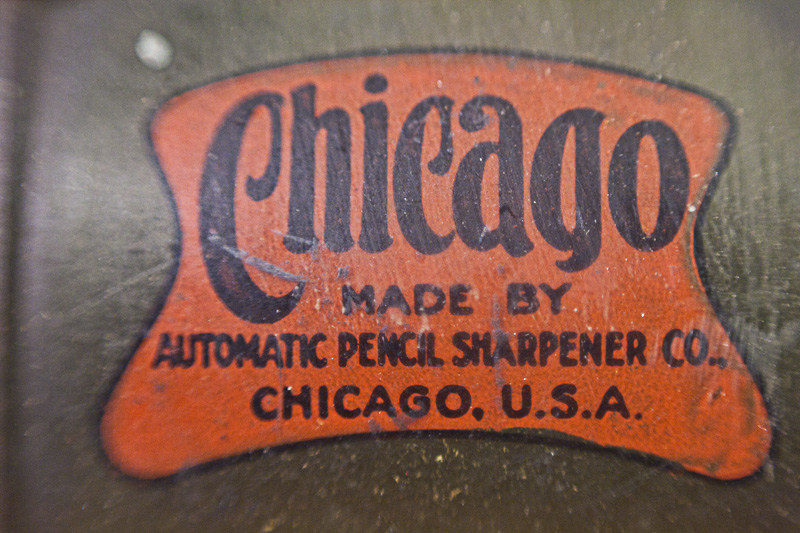
Chicago Automatic Pencil Sharpener
Before I tell the mildly interesting story of how I found this Chicago Automatic Pencil Sharpener, I should explain something first. When we met the agent to have a look at the house we live in, we couldn’t help noticing that it was like a time machine back to the 50s. From the remaining pieces of furniture and antique appliances to the old paneling, tiles, and decor, the place was somewhat like a museum.
The little old lady who had previously lived here didn’t seem to change things very often. Even after moving in six years ago (it had been empty for some time), we still find old bits ‘n’ bobs left behind. I ran across owner’s manuals for some of the antique appliances that were in good condition (appliances AND the manuals), a very old bottle of dishwashing detergent, old canning tools, and even an old painting by Grif Teller tossed in the insulation of the attic.
Discovering the Chicago Automatic Pencil Sharpener
Today I found an antique pencil sharpener in our house in a rarely used hallway in the basement where utilities are tucked away. I was looking for a place to run a microphone cable in my home studio. There was an object I thought might be an old hat hanging on a hook. It was actually this vintage Chicago Automatic Pencil Sharpener.
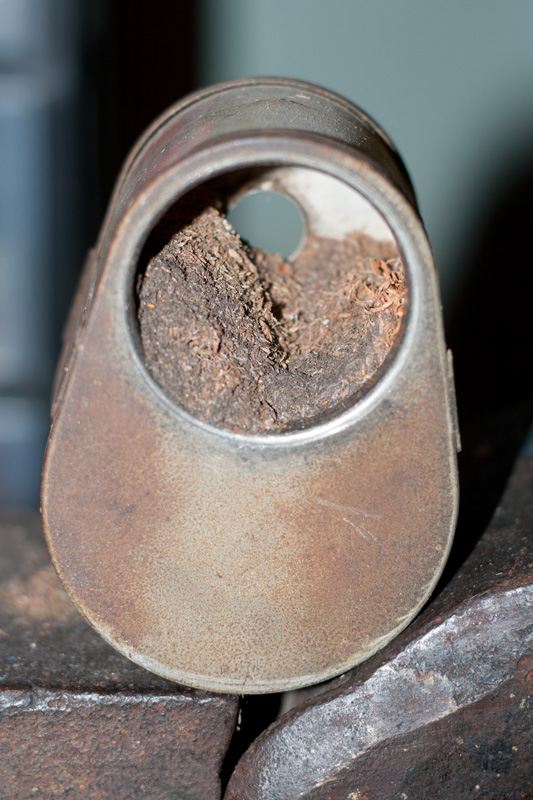
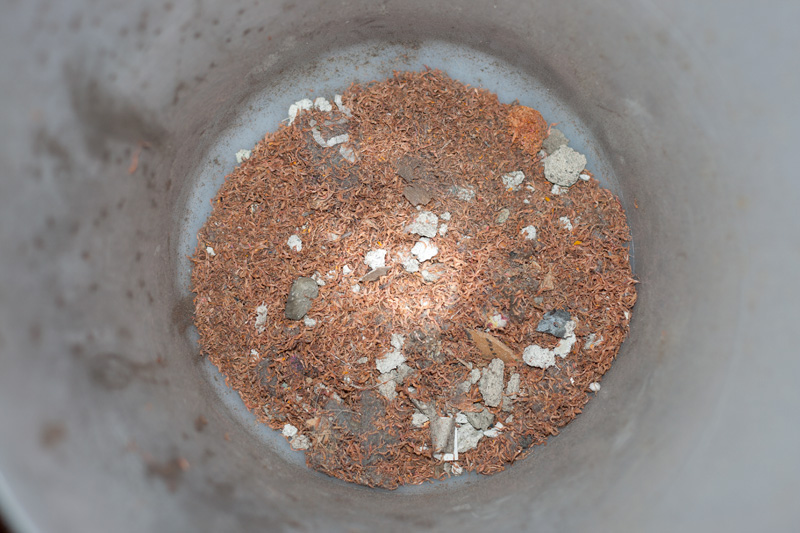
The sharpener was completely jammed with shavings. Knowing how the previous owner never seemed to update anything past the 50s, I have no idea how long these shavings may have been in there. I decided to take a few photos of the sharpener before disposing of the shavings. It took a while to scrape and pry them out, but the mechanism underneath was surprisingly intact.
History of the APSCO Chicago Model
After looking online for additional information, this particular sharpener seems to have been in production between 1915 and the 1940s. Manufactured by the Automatic Pencil Sharpener Company (APSCO), these devices were the “Ford Model T” of the classroom and office, ubiquitous, reliable, and affordable.
While the company was originally based in Chicago, they moved their main factory to Rockford, Illinois, around 1914, which explains the “Rockford, Ill.” stamp often found on the base. Unlike cheaper single-blade sharpeners, the Chicago model used twin milling cutters. These cylindrical blades rotate around the pencil in a “planetary” motion, a key innovation of the time that prevented the wood from splintering and ensured a clean point.
Dating the Patent Numbers
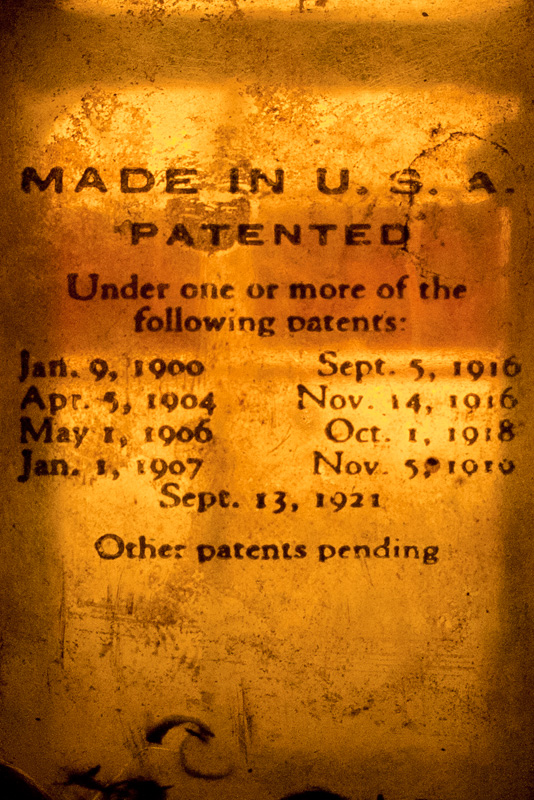
If you look closely at the body of the unit (see the photos below), you can often see a list of patent dates. On this specific unit, the dates range from January 9, 1900, to September 13, 1921. This suggests that while the design roots go back to the turn of the century, this specific unit was likely manufactured in the 1920s.
For those interested in the specific mechanics, you can often find the original patent filings on sites like Google Patents. It is fascinating to see how over-engineered these everyday objects were compared to modern plastic equivalents.
Restoring the Sharpener
These units were built to last. The body is typically nickel-plated steel, and the transparent windows on the shavings bin were originally made of celluloid or early plastics. If you find one in the wild, they often just need a good cleaning to return to working order.
On to the photos.