
A Sea in the Sky: Asperitas Clouds Over Lebanon, Ohio
A crisp autumn afternoon on October 21, 2023, provided an ideal setting for a family trip to Irons Fruit Farm in Lebanon, Ohio. My wife and I had taken our children to enjoy the fall weather, choose pumpkins, take a hayride, and indulge in fresh apple cider donuts and some exceptionally good apple fritters.
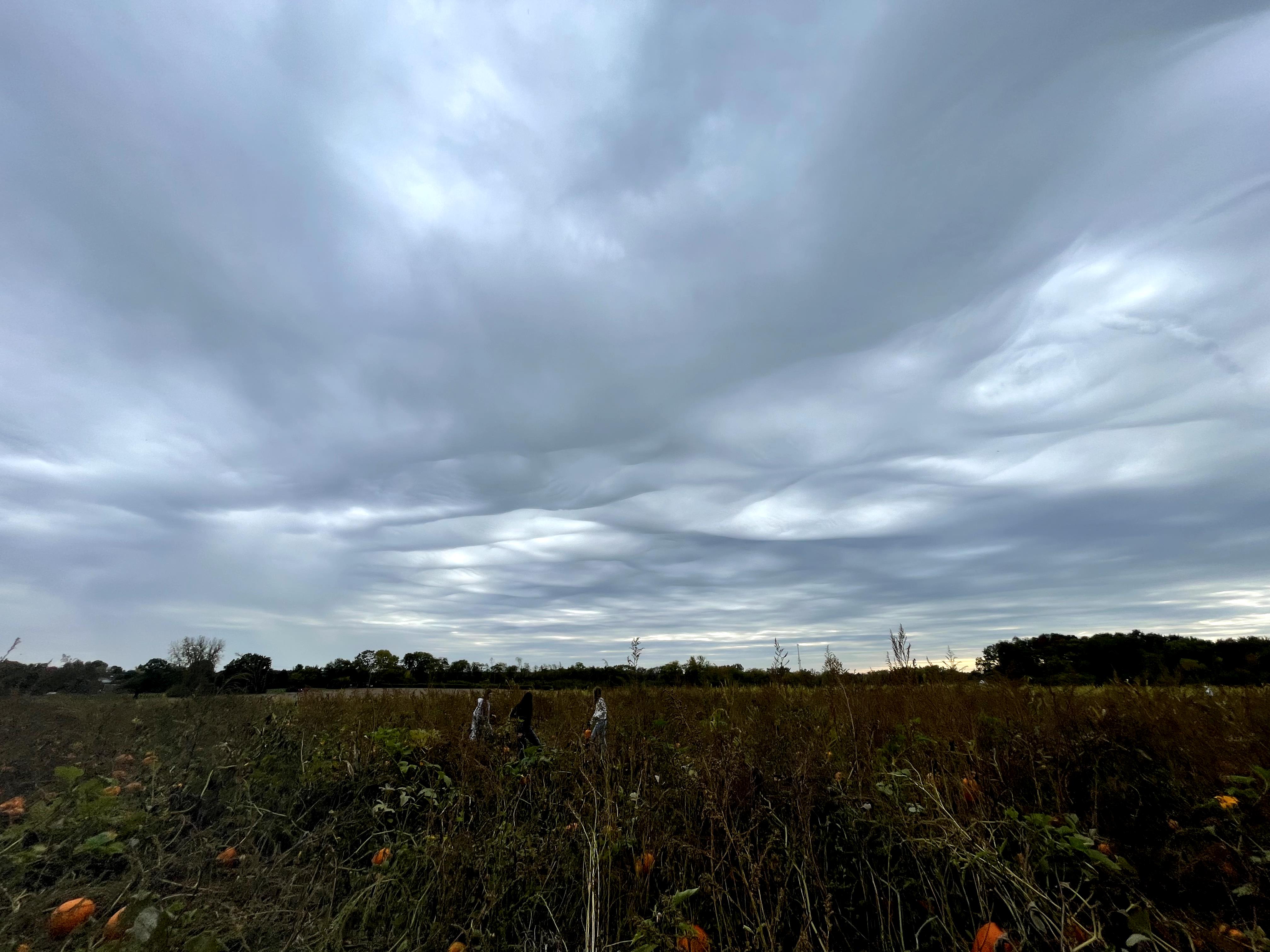
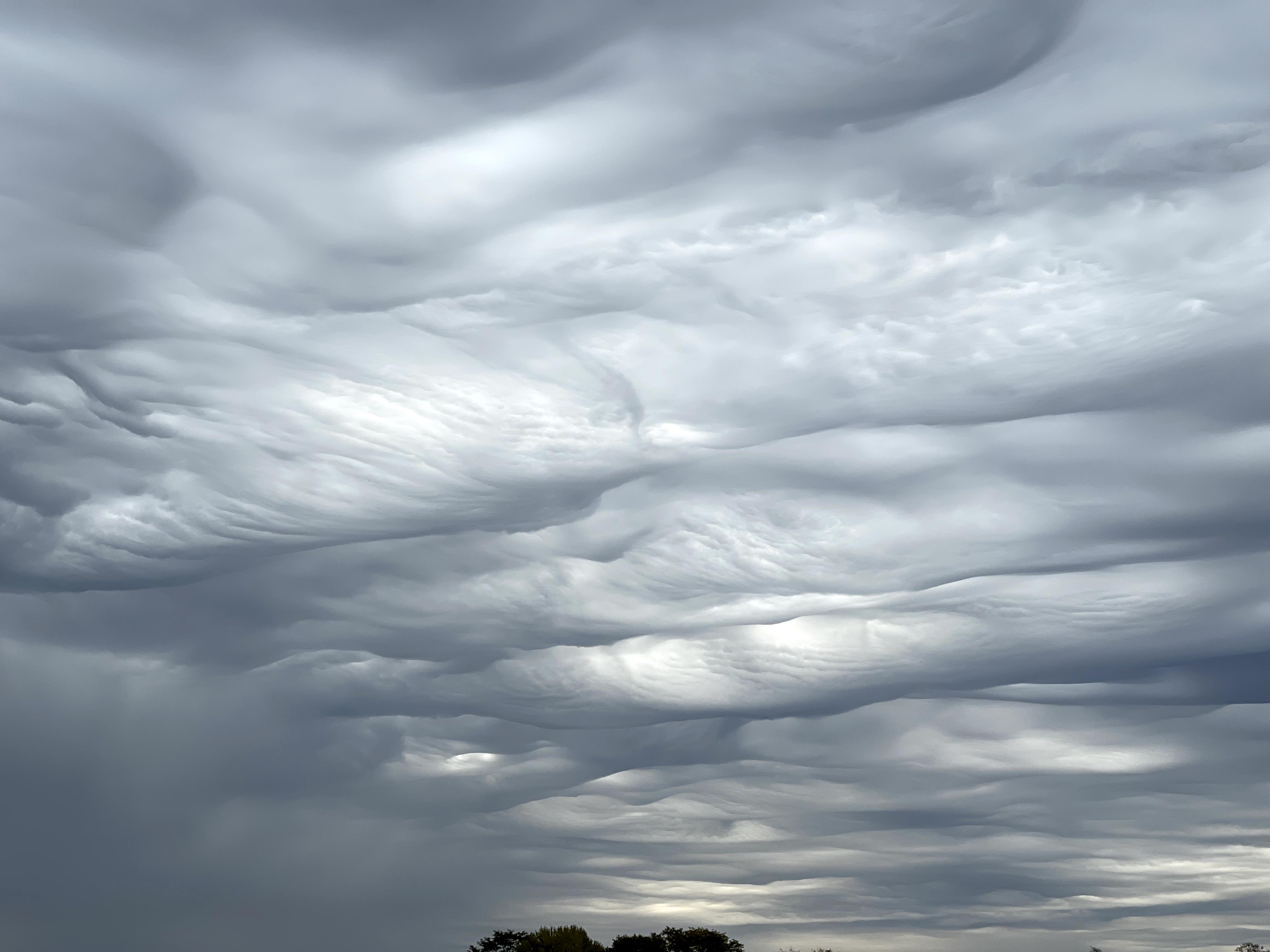
While we were there, the sky above the farm developed into something far less ordinary. Broad, sculpted waves spread across the underside of the cloud layer, giving the remarkable impression of looking upward at a turbulent sea.
The surviving EXIF timestamps from my camera place the most dramatic portion of the display between approximately 2:47 PM and 2:57 PM EDT. Fourteen photographs document the changing appearance of the cloud deck during that brief window.
Historical weather observations for Lebanon provide some context. At 2:35 PM, shortly before I started shooting the sky, Weather Underground recorded a temperature of 59°F, relative humidity of 72 percent, cloudy skies, and winds from the south-southeast at 5 mph. At 2:55 PM, during the final minutes of the photographic sequence, the observations showed 59°F, relative humidity of 77 percent, easterly winds at 3 mph, and 0.01 inch of precipitation with light rain. While a bit on the geeky side of things, it matters in context.
The cloud layer in these photographs exhibits the atmospheric feature known as asperitas. The World Meteorological Organization formally introduced asperitas as a supplementary feature in the 2017 edition of the International Cloud Atlas. It is not a separate cloud genus but a distinctive structure associated most commonly with Altocumulus and Stratocumulus clouds.
Asperitas is characterized by well-defined, localized waves on the underside of a cloud layer. Compared with the more regularly organized waves of the cloud variety undulatus, asperitas is significantly more chaotic and has less horizontal organization. The waves may be smooth or textured with smaller features and can sometimes descend into sharp points. Differences in cloud thickness and ambient illumination can produce the extraordinary appearance of a roughened ocean surface viewed from below.
That description closely matches the cloud ceiling over Irons Fruit Farm that afternoon. Large sweeping forms occupied a large portion of the sky, while smaller ripples and folds appeared within them, producing an unusually three-dimensional cloud base. It was quite surreal to me as I had never seen anything quite like it before.
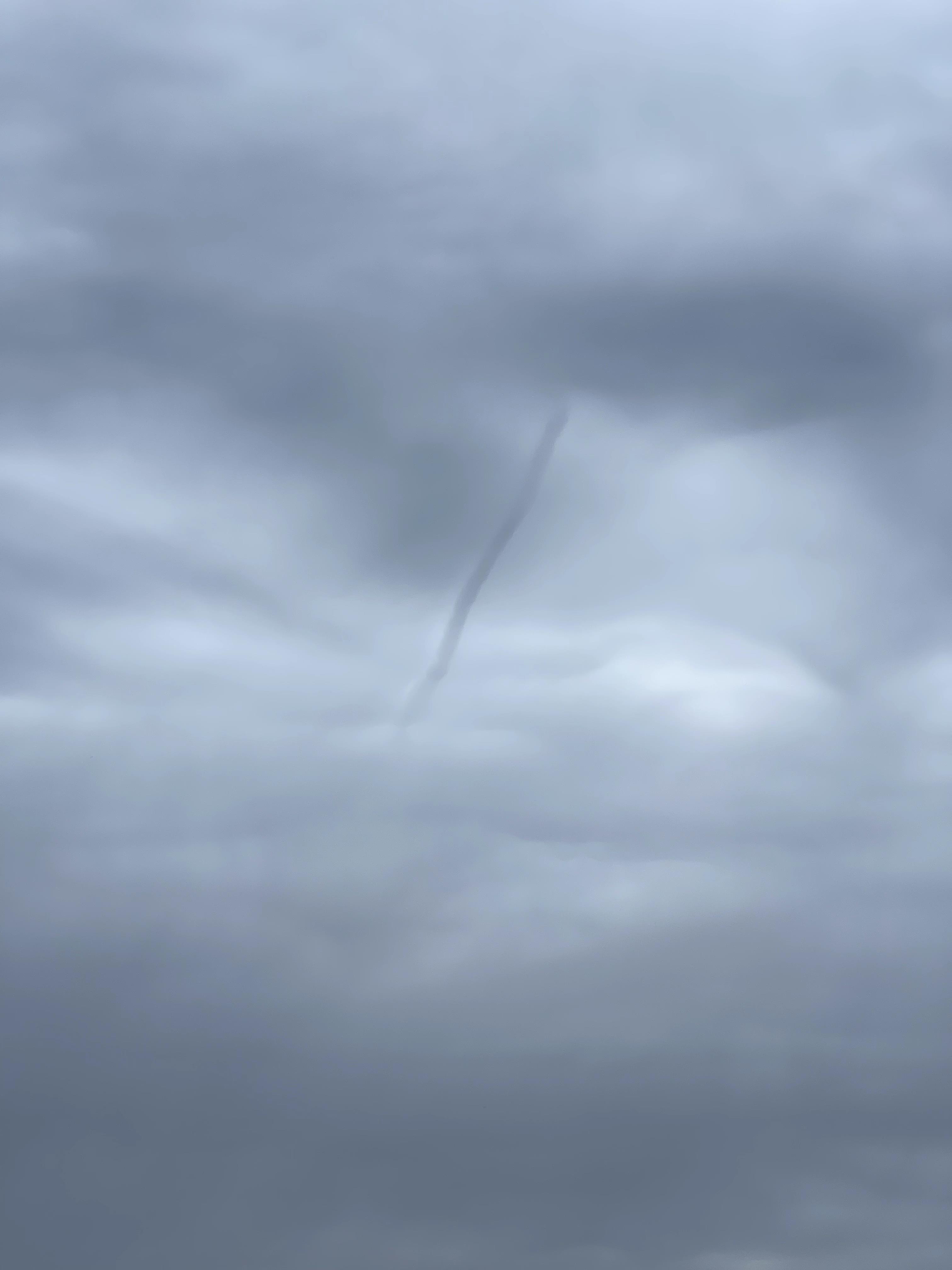
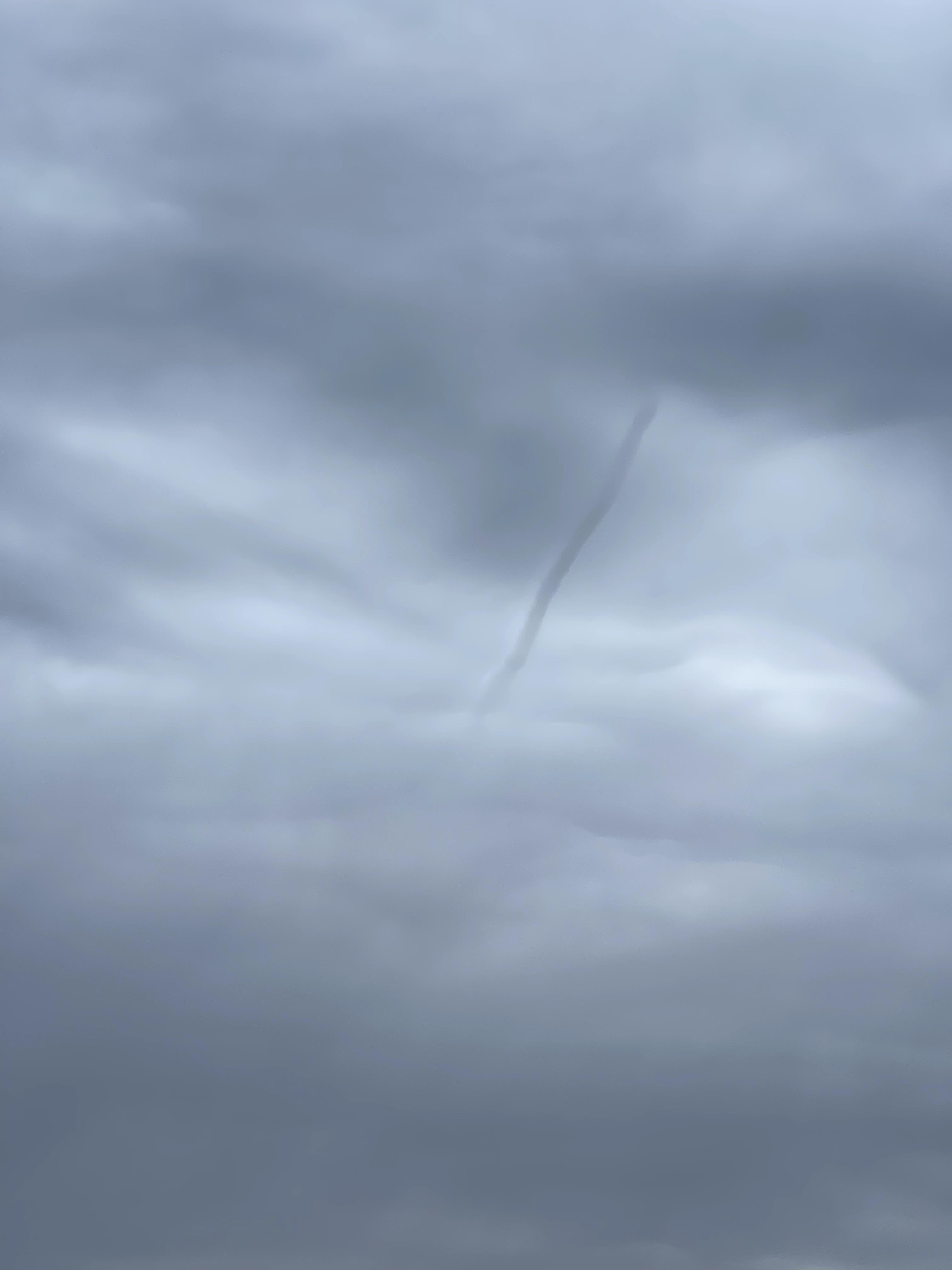
Three photographs capture another curious detail. A narrow, tapered feature appears to extend downward from the cloud base. The three images were taken consecutively at approximately 2:56:50 PM, within less than one second of one another, showing the feature in essentially the exact same location and form. Normally I would avoid these sort of redundancies, but for the sake of historical purposes, they have all been included.
Its appearance is certainly suggestive of a small funnel (my first impression), but the photographs alone do not provide enough evidence to identify it as a funnel cloud. A meteorological funnel cloud is a condensation funnel associated with a rotating column of air extending from the base of a towering cumulus or cumulonimbus cloud, and rotation cannot be established from still frames. Believe me when I say it didn’t look like a tornado, but that’s a different story.
There are also non-vortical possibilities. The World Meteorological Organization notes that asperitas waves can sometimes descend into sharp points. For that reason, the feature may simply be part of the highly sculpted asperitas cloud base or another transient cloud structure. Without evidence of rotation, identifying it more specifically would be purely speculative.
Importantly, the funnel-like feature appears only in the three still photographs. I don’t recall it lasting very long. Unfortunately, it is not visible in the video footage recorded during the same visit.
The photographs below document the asperitas display at Irons Fruit Farm between approximately 2:47 and 2:57 PM EDT on October 21, 2023.
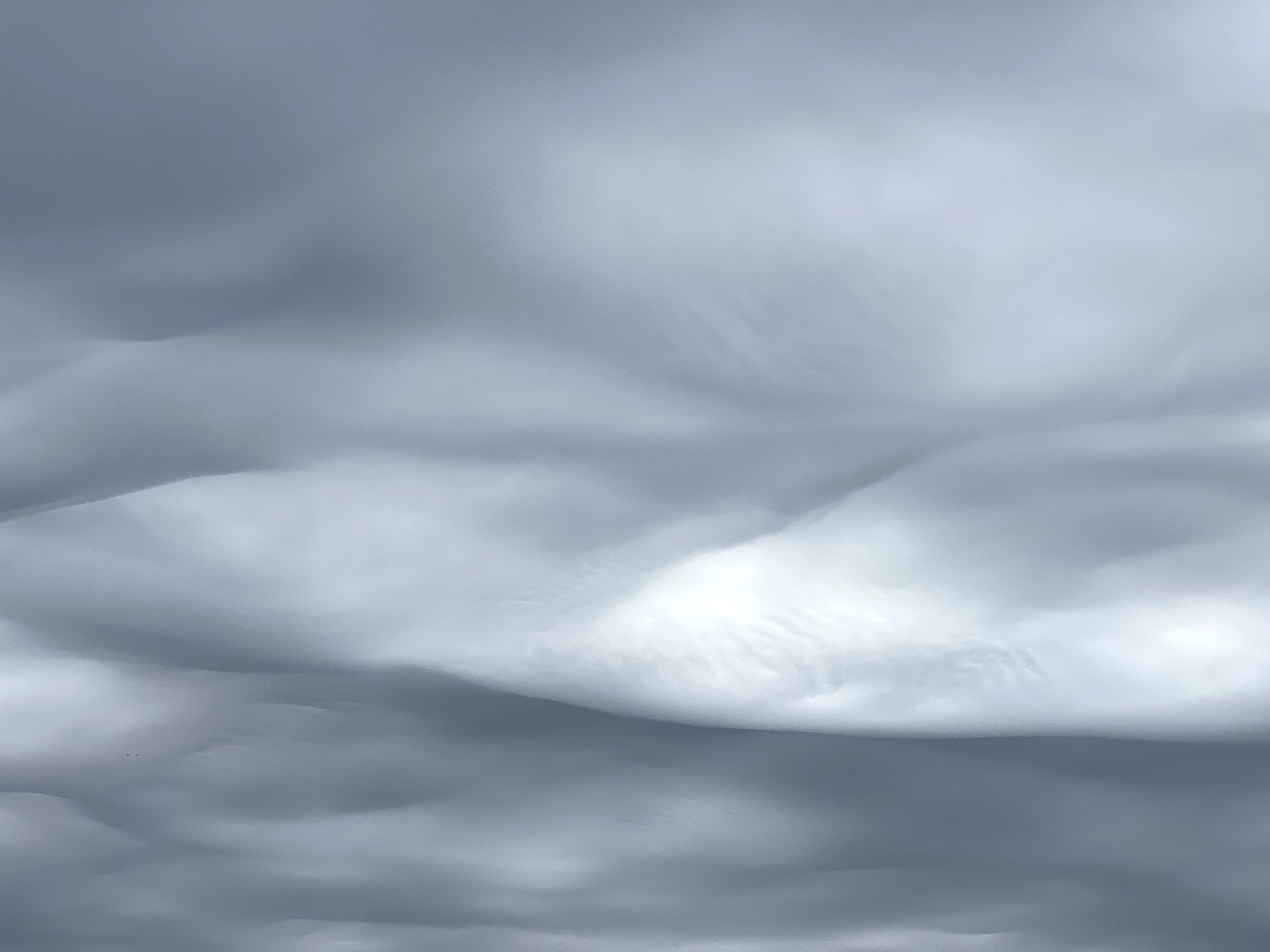
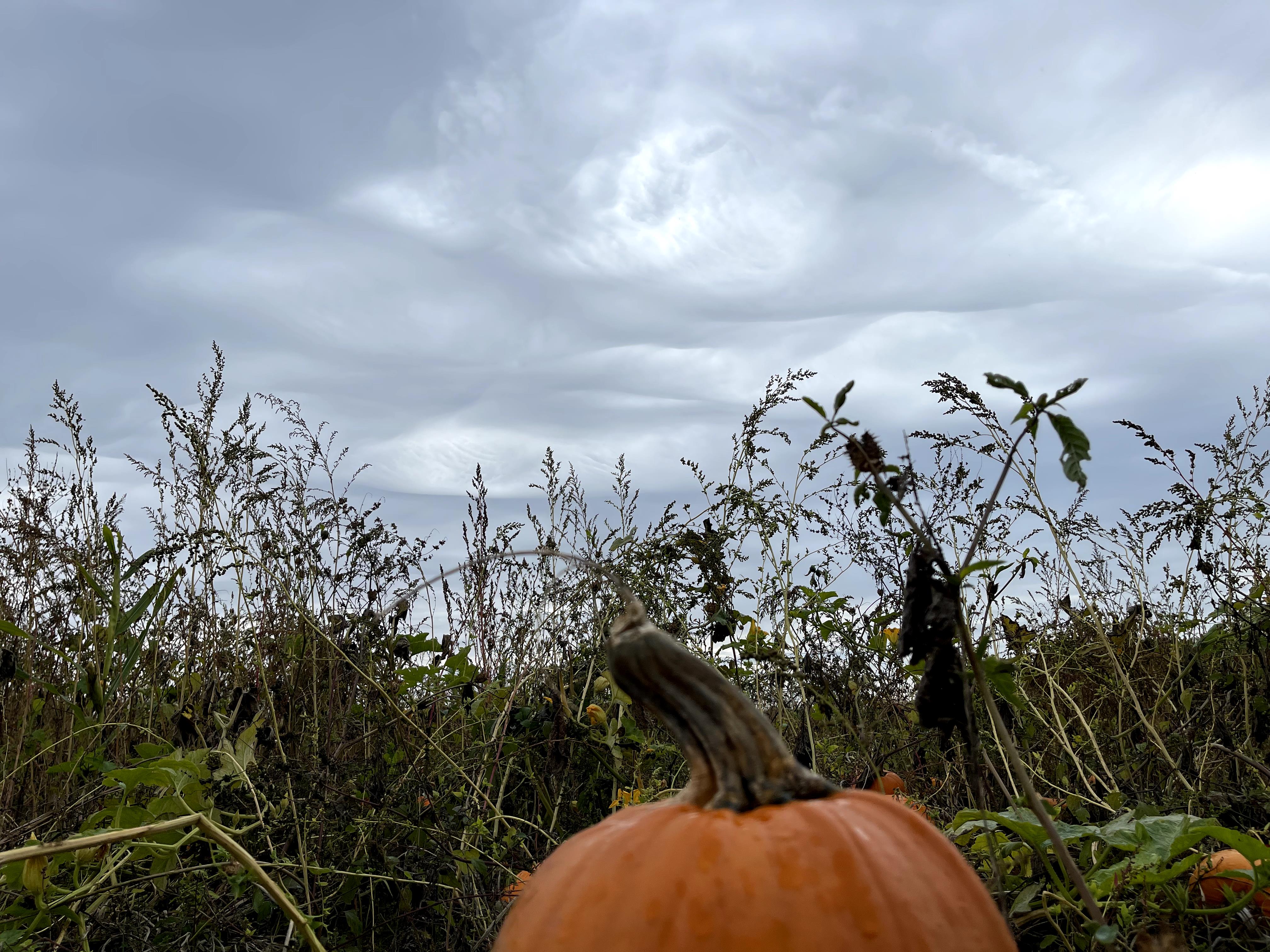
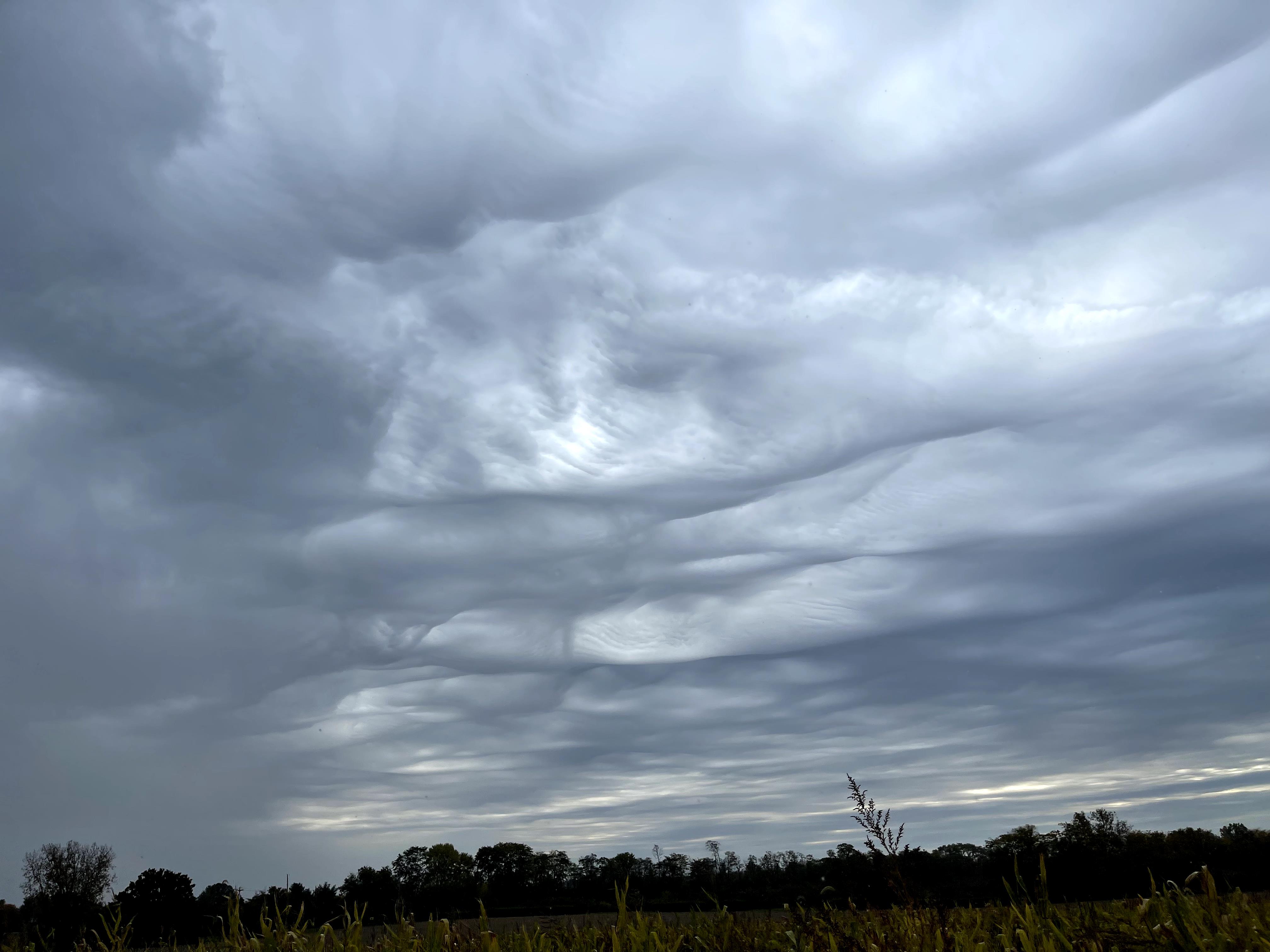
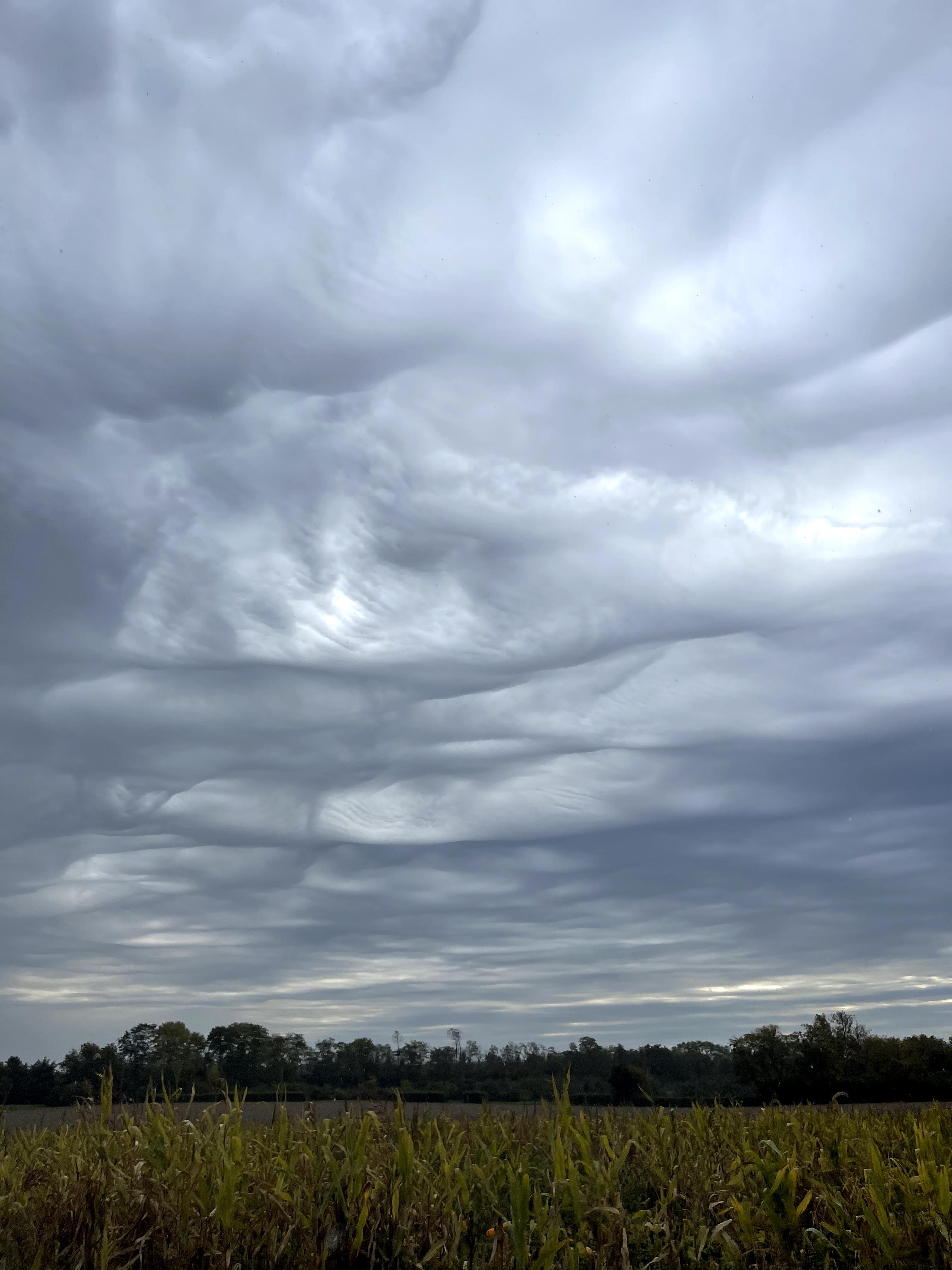



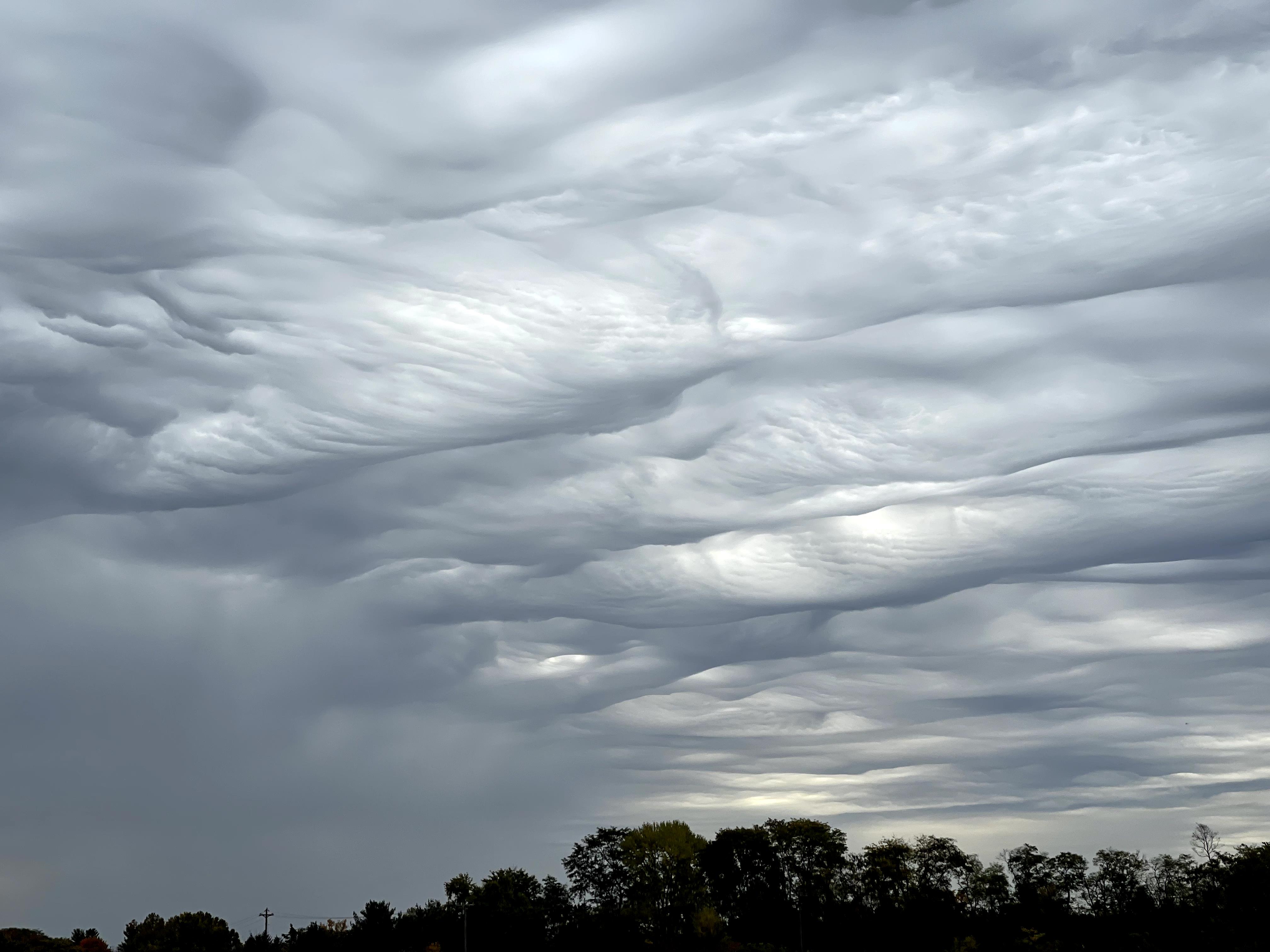

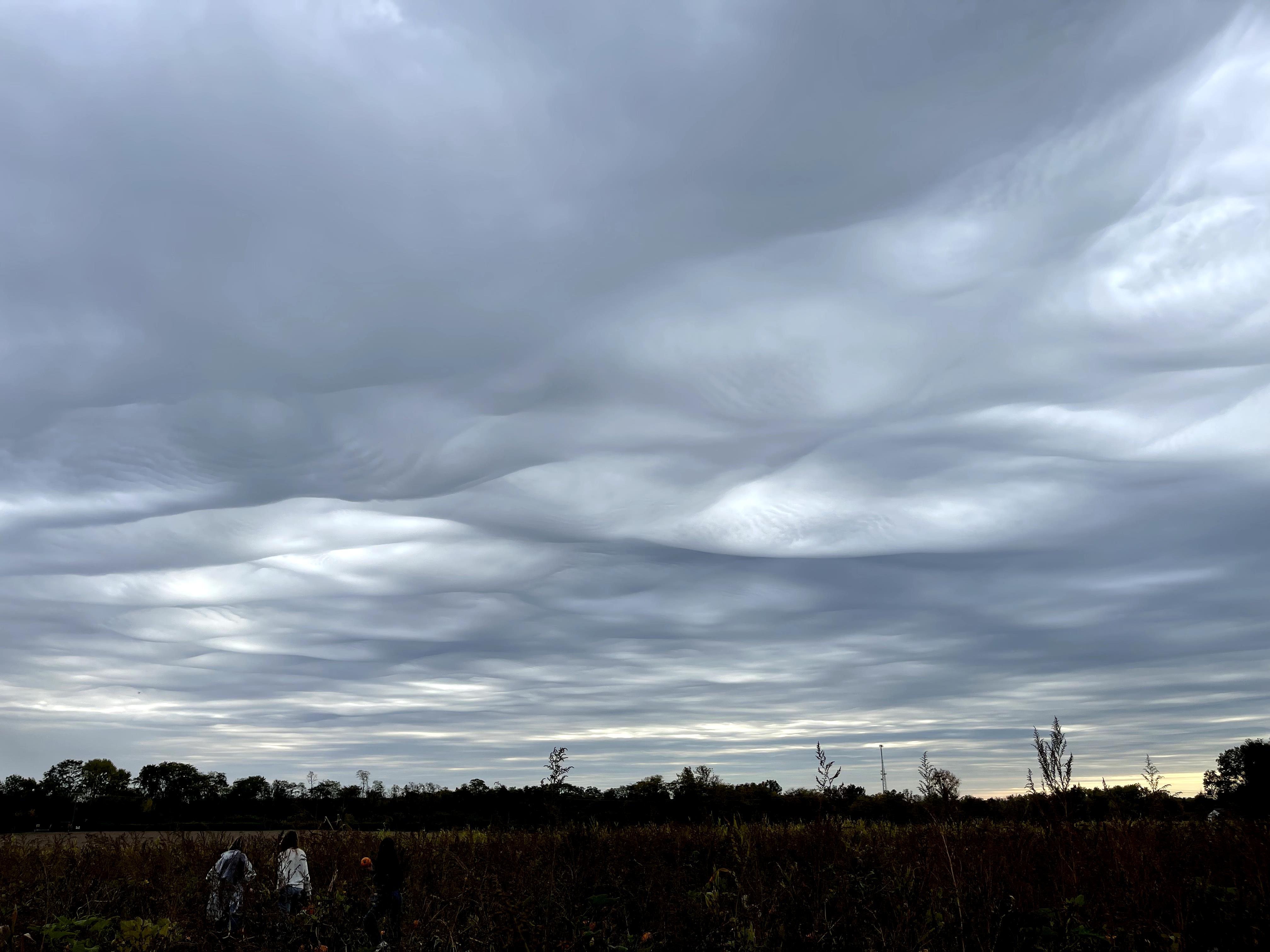
I also recorded 33 seconds of video during the event. Most of the footage holds a steady view of the cloud base before panning across the sky near the end, providing a broader sense of the scale and extent of the asperitas formation.
The narrow funnel-like feature visible in the final three photographs does not appear in this footage.
At the time, I didn’t think too much about it, aside from it being peculiar and fascinating. After stumbling across the photos today, I realize now it was more significant than I knew at the time. It was a great day and I am glad we had a chance to experience this phenomena together as a family.
World Meteorological Organization, International Cloud Atlas: Asperitas.
World Meteorological Organization, History of Cloud Nomenclature.
NOAA National Weather Service, Glossary: Funnel Cloud.
Weather Underground, Historical weather observations for Lebanon, Ohio, October 21, 2023.